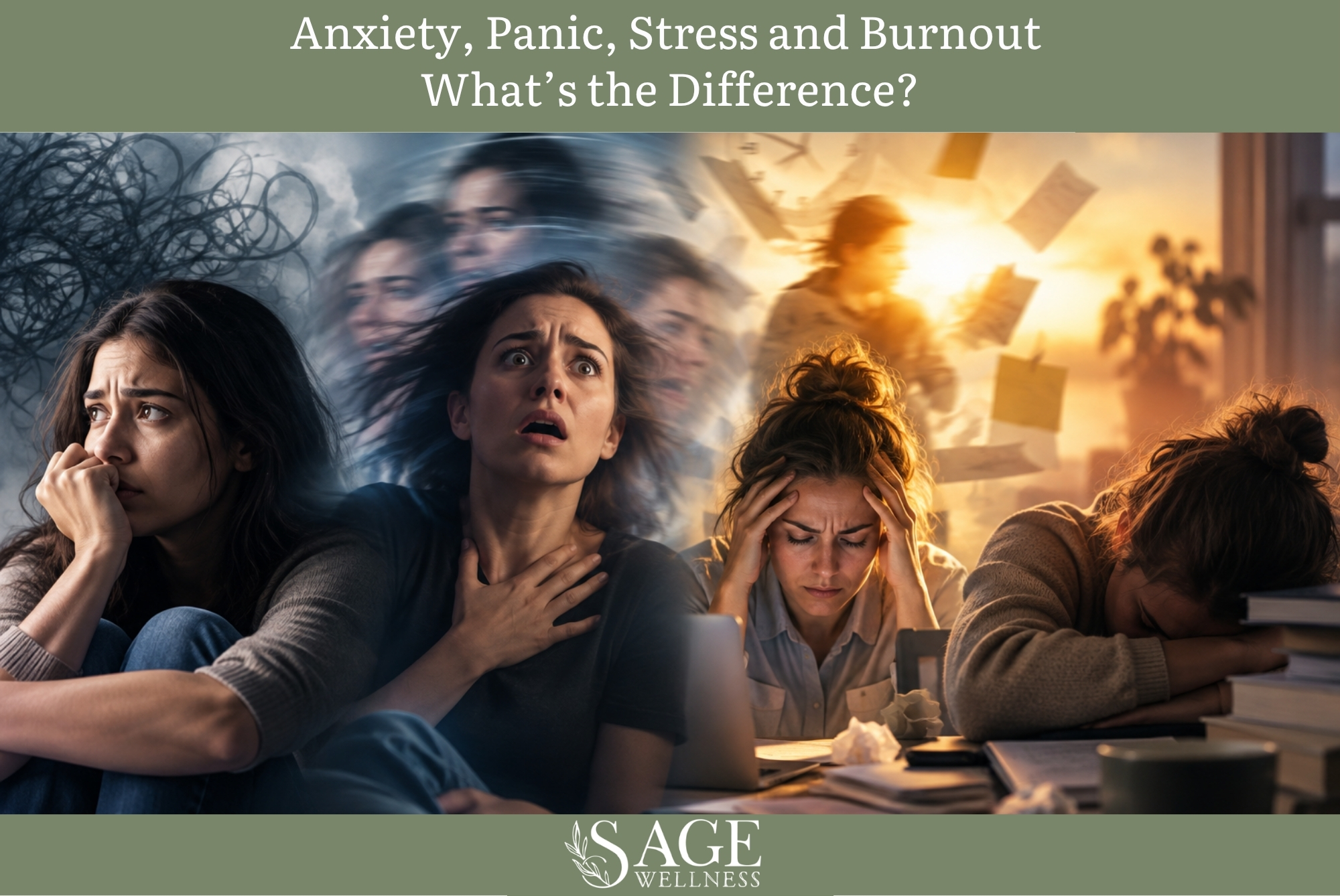
 “I don’t know if I’m anxious, stressed, or just burnt out.” It’s one of the most common things clients say in their first session — and it makes sense. Anxiety, panic, stress, and burnout can all produce a racing heart, poor sleep, and a sense of dread. But they aren’t the same experience, and knowing the difference helps you and your therapist choose the right path forward.
Stress: The Body’s Response to Pressure
Stress is a natural, short-term response to a demand or threat — a deadline, a conflict, a big decision. It usually has a clear cause and tends to ease once the pressure lifts. Some stress is even useful, sharpening focus and motivation. Stress becomes a concern when it’s constant, when the causes pile up faster than you can recover, or when your usual coping strategies stop working.
Anxiety: When Worry Becomes a Pattern
Anxiety is what happens when the alarm system stays on even without a clear, present threat. It often involves persistent worry, a sense of dread about the future, and physical symptoms like muscle tension or a racing mind. Unlike ordinary stress, anxiety doesn’t necessarily resolve once a specific problem is solved — it tends to find a new target to latch onto.
Panic: The Body’s Alarm System Misfiring
Panic attacks are sudden, intense surges of fear that peak within minutes, often bringing a pounding heart, shortness of breath, dizziness, or a feeling of losing control or impending doom. Panic can occur on its own or as part of an anxiety disorder, and unlike everyday stress, it often strikes without an obvious external trigger.
Burnout: Depletion from Chronic Overload
Burnout develops gradually, from prolonged, unrelenting stress — most often related to work, caregiving, or an overloaded schedule. It shows up as emotional exhaustion, cynicism or detachment, and a diminished sense of accomplishment. Unlike anxiety, burnout is less about worry and more about depletion: you may not feel afraid, just utterly out of gas.
How to Tell Which One You’re Experiencing
A few questions can help clarify what you’re facing:
- Does it ease when the specific stressor resolves? (More likely stress.)
- Does the worry persist and spread even when things are objectively fine? (More likely anxiety.)
- Do you experience sudden, intense episodes of fear that peak and pass? (More likely panic.)
- Do you feel emotionally numb, cynical, or depleted, especially related to work? (More likely burnout.)
These categories often overlap — chronic stress can develop into anxiety, and unmanaged anxiety can contribute to burnout. A therapist can help you sort out what’s driving your symptoms rather than guessing on your own.
How Therapy Addresses Each
Treatment looks different depending on what’s underneath your symptoms. Stress often responds well to boundary-setting and coping skills. Anxiety typically benefits from CBT and nervous-system regulation strategies. Panic attacks respond especially well to structured, skills-based treatment that reduces their frequency and intensity. Burnout often requires addressing both the external demands causing depletion and the internal patterns — like perfectionism or difficulty saying no — that keep you overextended.
Frequently Asked Questions
Can you have anxiety and burnout at the same time?
Yes, it’s common. Chronic anxiety can drain the same emotional and physical resources that protect against burnout, and burnout can heighten anxiety by leaving you with fewer coping resources. Many people experience both together, especially during prolonged periods of work or caregiving stress.
What’s the difference between a panic attack and an anxiety attack?
“Panic attack” is a clinical term for a sudden, intense episode of fear with distinct physical symptoms that peaks within minutes. “Anxiety attack” isn’t an official clinical term, but people typically use it to describe a more gradual build-up of worry and physical tension rather than a sudden spike.
Is burnout a mental health diagnosis?
Burnout is recognized by the World Health Organization as an occupational phenomenon related to chronic workplace stress, but it is not a standalone clinical diagnosis in the way depression or generalized anxiety disorder are. That said, it’s a real and treatable condition, and therapy can address the symptoms and underlying causes.
When should I see a therapist for stress?
Consider reaching out if stress is interfering with your sleep, relationships, work performance, or physical health, if it isn’t easing even when circumstances improve, or if you’re relying on unhealthy coping strategies to get through the day. Earlier support often makes treatment shorter and easier.
Ready to talk to someone?
Sage Wellness offers confidential individual, couples, family, and group therapy at our 8th Ave and Haile Village offices in Gainesville, FL, as well as secure telehealth across the state. Call or text (352) 474-8882, or request an appointment online, to be matched with the therapist who’s the right fit for you.
Contact Information
Sage Wellness
📍 4881 NW 8th Ave, Suite 1, Gainesville, FL 32605
📍 4850 SW 91st Terr, #P102, Gainesville, FL 32608
📞 Phone: (352) 474-8882
🌐 Website: gainesvillesage.com